A contact page can do everything right and still lose trust at the form.
The page may explain the offer clearly. It may show proof near the call to action and make the next step feel simple. Then the form asks for a budget, timeline, phone number, company size, project category, desired package, referral source, and a message before the buyer knows how any of it will be used.
Each field may help the business. Each one also asks the buyer for more work, more context, or more confidence before the relationship begins.
Every field spends trust
An inquiry form is a trust surface as much as a data-collection surface.
Name and email are expected. Budget, timeline, phone number, revenue range, address, company size, and long project descriptions cost more because they can make a buyer wonder what judgment will be made before anyone speaks to them.
Those fields need to earn their place.
The internal form is different from the buyer form
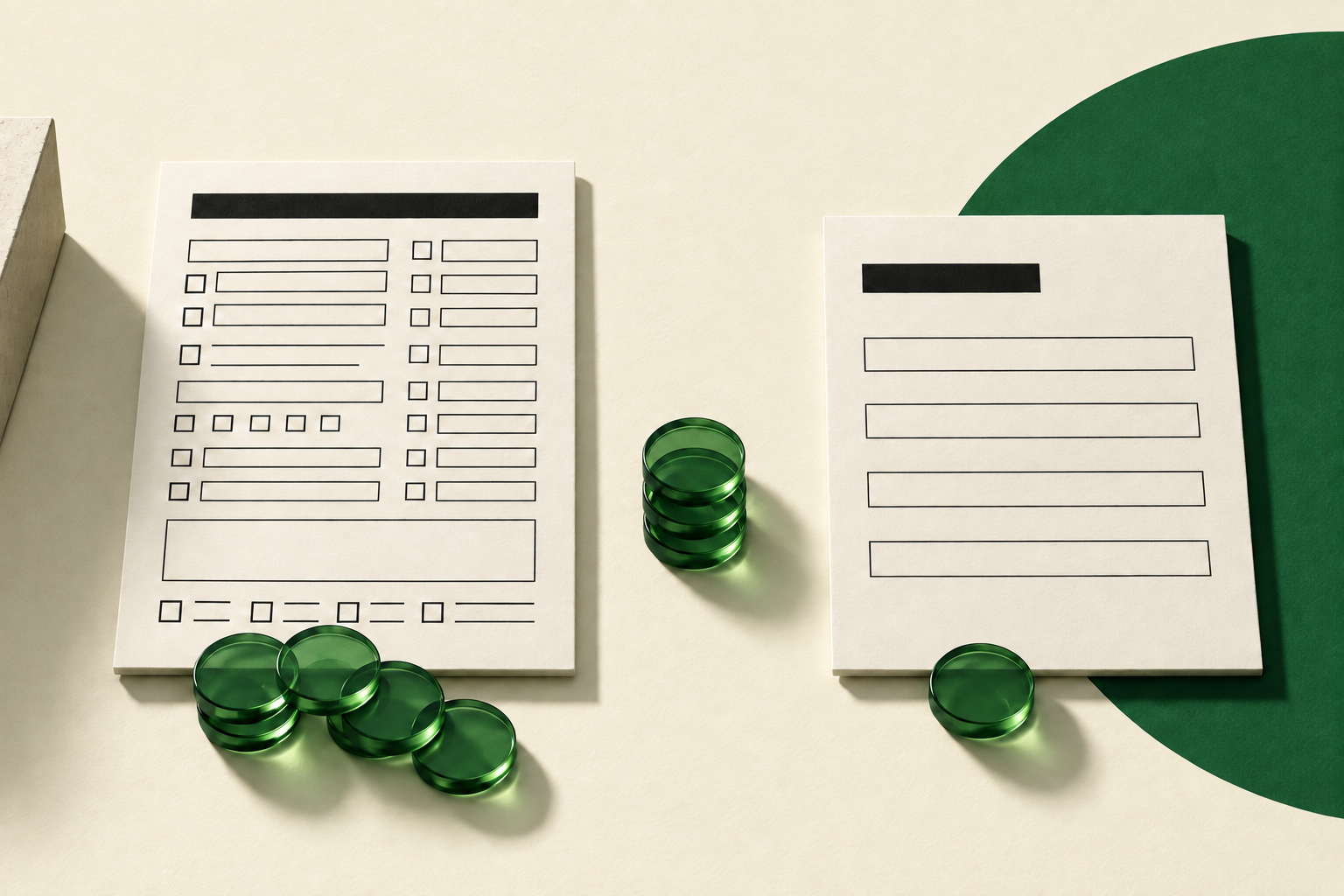
Businesses often build forms by listing everything the team would like to know before replying. The result is an efficient internal intake form that can feel like a gate to the buyer.
If the page promises a low-friction first conversation and the form behaves like a qualification interview, the page and form are arguing with each other.
The repair starts by deciding which questions belong before trust is established and which can wait until after the first response.
Before and after: Vale Studio
Vale Studio is a fictional service business created for this example.
Its first inquiry form asks for:
- name;
- email;
- phone number;
- company;
- website;
- budget;
- timeline;
- services needed;
- a project description.
The team can use every answer. The trust problem is that the form gives no reason for its heavier questions. A buyer has to guess whether budget will be used to scope honestly, screen them out, upsell them, or decide whether they deserve a reply.
A trust-budgeted first step keeps four fields:
- name;
- email;
- website, when there is one;
- the thing that needs to change.
It then adds a clear boundary:
Budget can wait. If the issue sounds like a fit, we will reply with the likely first step and the range of work before asking for a detailed number.
The improved version works because the form matches the promise of a first inquiry. It collects enough context for a useful reply without forcing every constraint into the opening message.
Optional fields still need a job
Low-pressure labels explain why a detail might help:
- Website, if there is one.
- Timeline, only when a real date is driving this.
- Context to review before replying.
The word “optional” carries little weight when the field still feels like a hidden qualification test. The label should show how the information improves the next step.
Explain what happens next
A form should end with more than “Submit.”
Useful next-step copy names who will reply, when they will reply, what the first response will contain, which details can wait, and which inquiries are outside the service boundary.
That information reduces the uncertainty attached to the form. It also gives the business a promise it can test against its actual response process.
Ask for the smallest useful truth
A first inquiry needs enough information for the next useful step. For a service business, that may be:
- the page, path, or moment that feels broken;
- the decision the buyer is trying to make;
- the deadline or external pressure attached to the work;
- the kind of first reply that would make the conversation useful.
These questions help the team answer with judgment. They also show the buyer that the business understands the problem before requesting sensitive details.
Run the four-state field check
List every field and assign one state:
- Required to reply.
- Helpful for routing.
- Helpful for scoping.
- Useful later.
Then write the buyer-facing reason for each field.
“This helps us send the right first response” can justify a field when the page explains that purpose. “We prefer to know this before talking” usually sends the field to a later step. “Sales wants to qualify the lead” identifies a deliberate gate that should be presented honestly.
The goal is to give every difficult question a buyer-facing reason.
Keep the form aligned with the page
An inquiry form is where the buyer tests whether the page’s promise is real.
When a page offers a simple first conversation, its form should feel like one. Detailed estimate requests can ask for more when they explain why; fit-focused paths should make fit easier to understand on both sides.
Mega City’s Website Clarity work covers inquiry paths where the page, form, and first response need to make the same promise.